A nanopore signal
You have the raw current of nanopore reads, as a SLOW5 file.
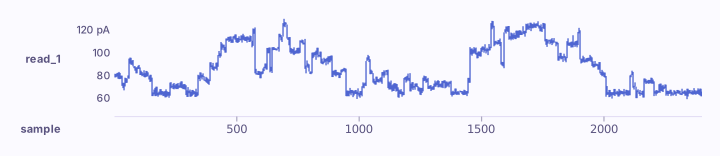
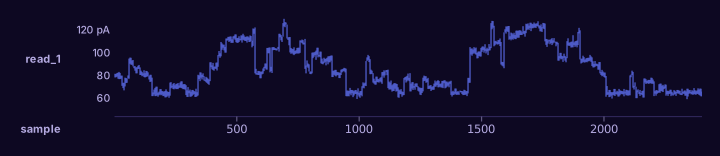
The ruler counts samples, and the current is in picoamperes, put there with the read's own digitisation, offset and range. The first read of the file is drawn and named in the margin, and the command says how many others the file holds.
Your file
SLOW5 is text. A BLOW5 file is the same in binary, and slow5tools view
writes it as text. A file of plain numbers, one sample after another, is read
too, as picoamperes already.
The bases the basecaller called come from its SAM or BAM, as Dorado writes it
with --emit-moves: its move table puts each base over the stretch of
current it was called from.
Change it
| To | Write |
|---|---|
| Another read | --read read_2 |
| The bases the basecaller called, over the current | --with-moves moves.sam |
| Part of the read | sample:1-500 as the place, before the file |
| Another colour | --color '#d55e00' |
The example files: reads.slow5, and
moves.sam for the bases. Every option:
karyon help squiggle, or the command line reference.